

Some professions, such as lawyer, physician and financial adviser, have a fiduciary duty of care to those they serve. Meaning they always have to do what is best for those they serve. Even if it’s against their own best interests.
Why don’t politicians have a fiduciary duty of care to their constituents?
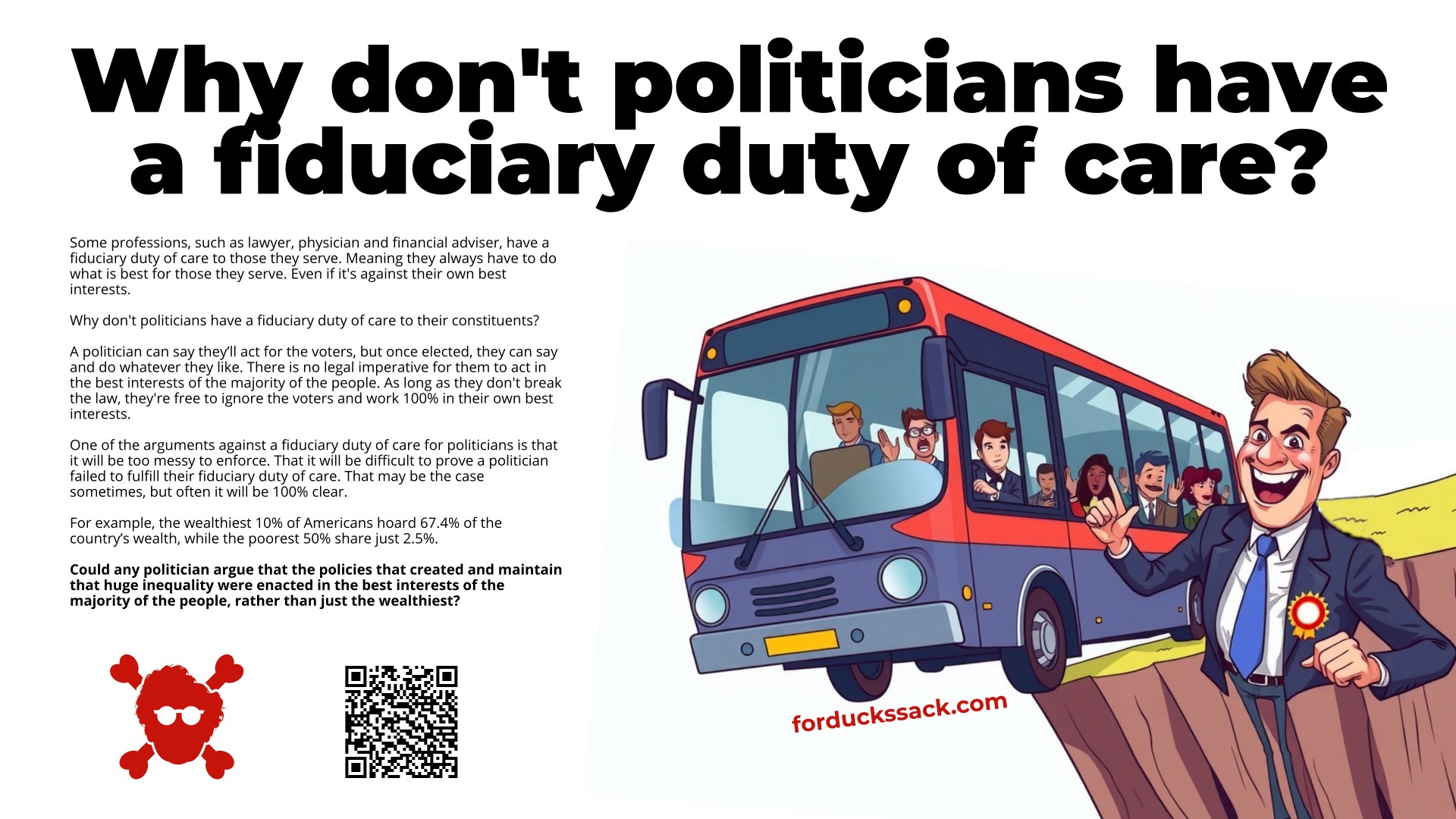
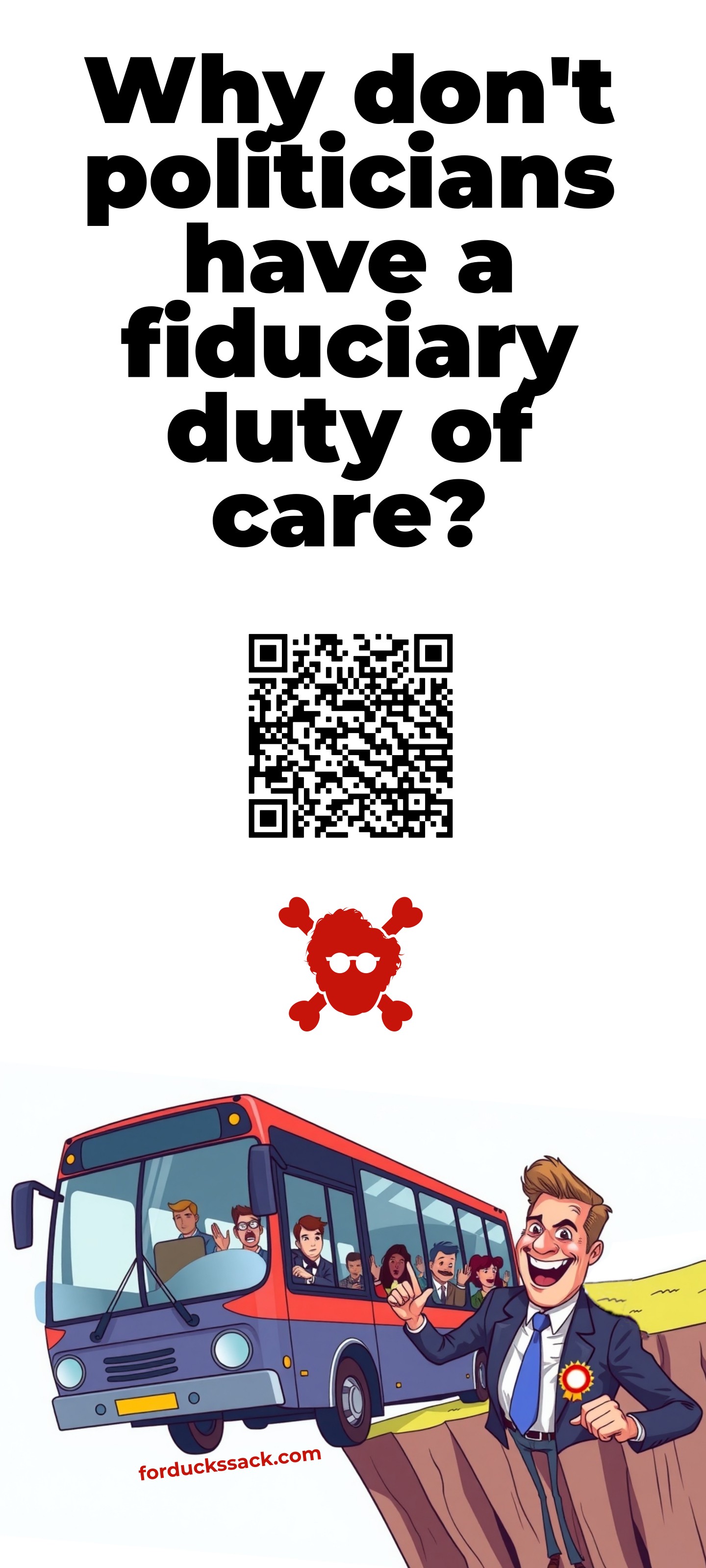
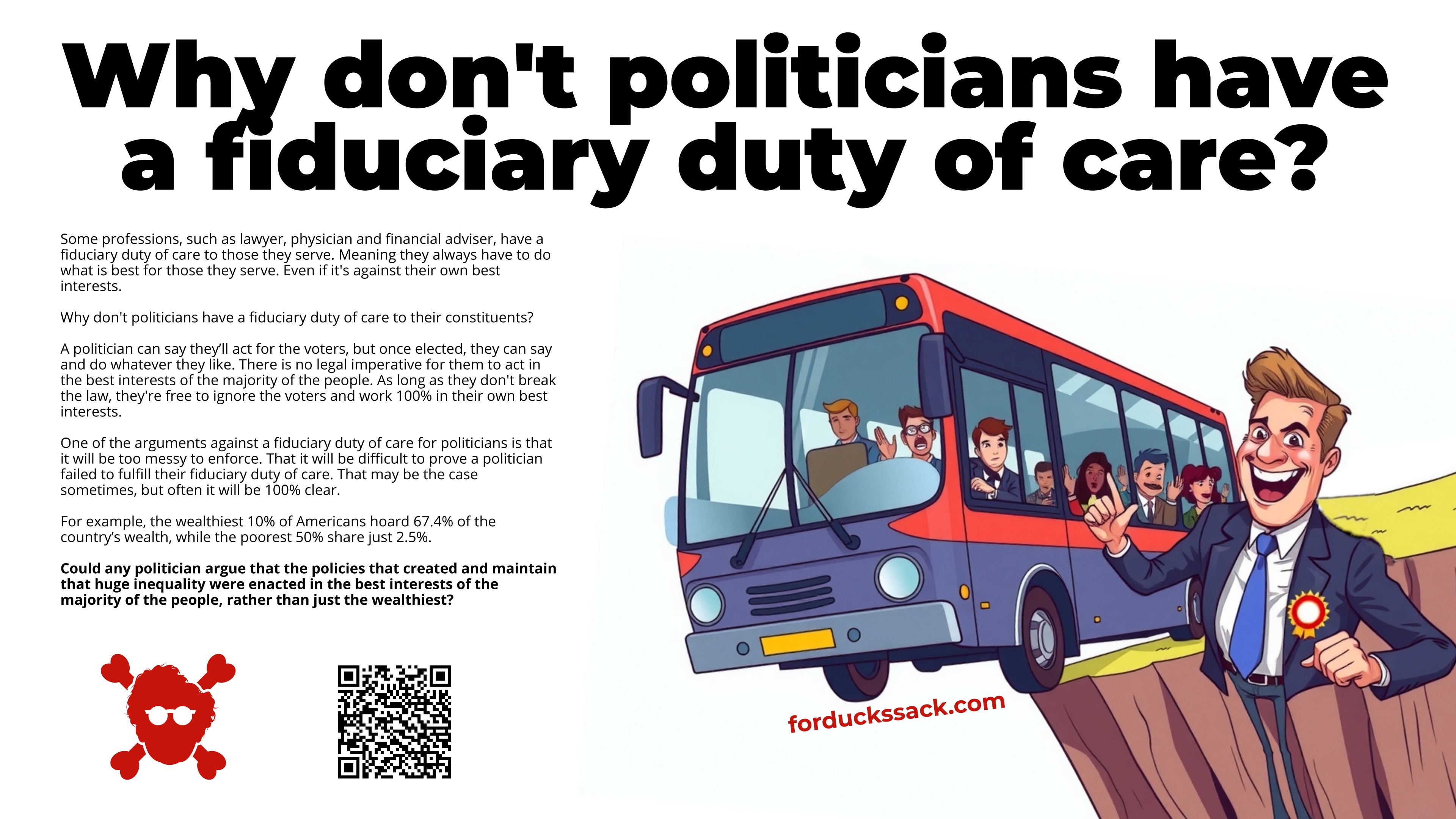
A politician can say they’ll act for the voters, but once elected, they can say and do whatever they like. There is no legal imperative for them to act in the best interests of the majority of the people. As long as they don’t break the law, they’re free to ignore the voters and work 100% in their own best interests.
One of the arguments against a fiduciary duty of care for politicians is that it will be too messy to enforce. That it will be difficult to prove a politician failed to fulfill their fiduciary duty of care. That may be the case sometimes, but often it will be 100% clear.
For example, the wealthiest 10% of Americans hoard 67.4% of the country’s wealth, while the poorest 50% share just 2.5%.
Could any politician argue that the policies that created and maintain that huge inequality were enacted in the best interests of the majority of the people, rather than just the wealthiest?
Download this post as a wallpaper
Save this post as wallpaper and share it in real life
What you just read? ☝ Shouldn't more people read it?
Share it now, before you forget


