

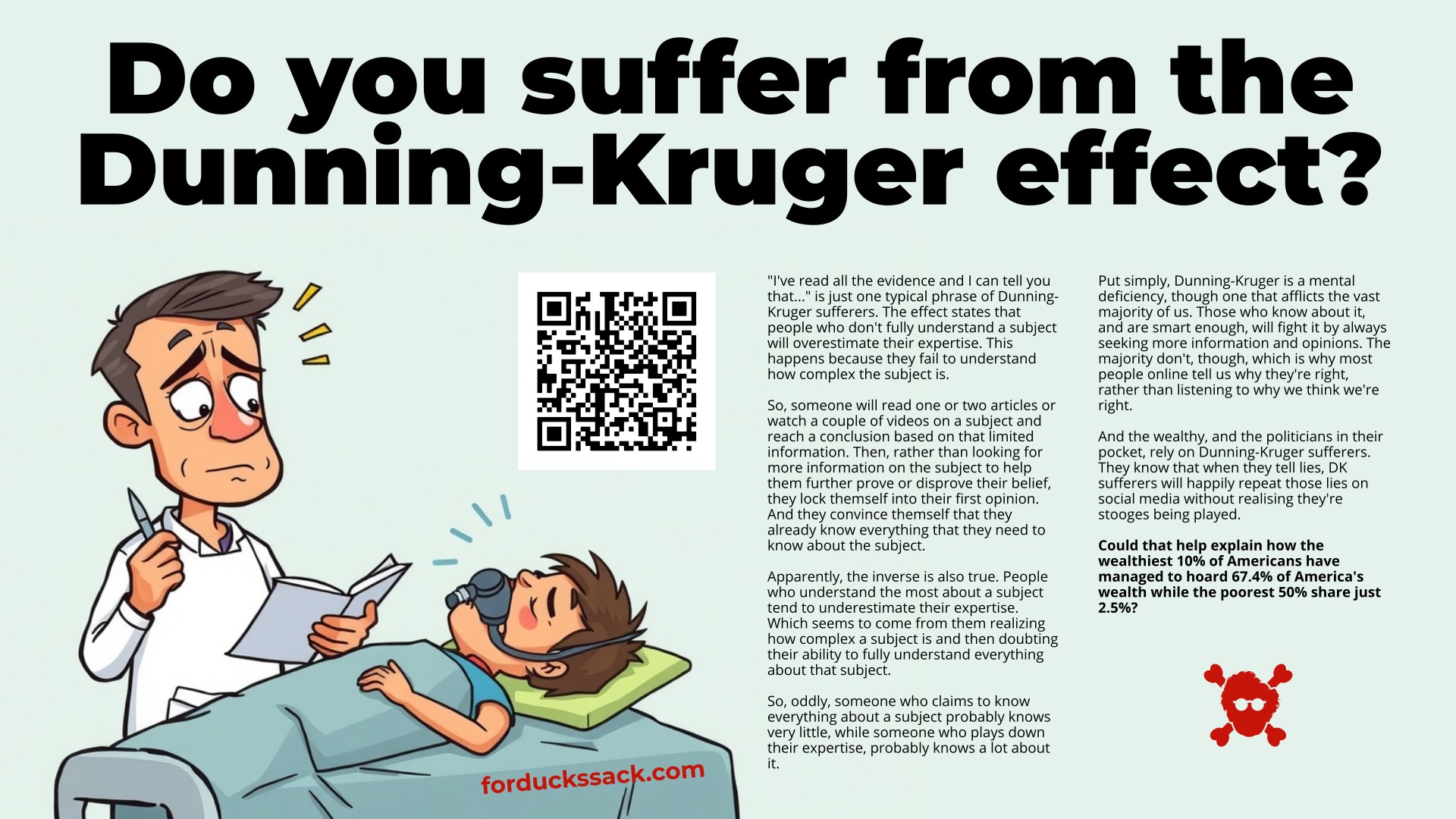
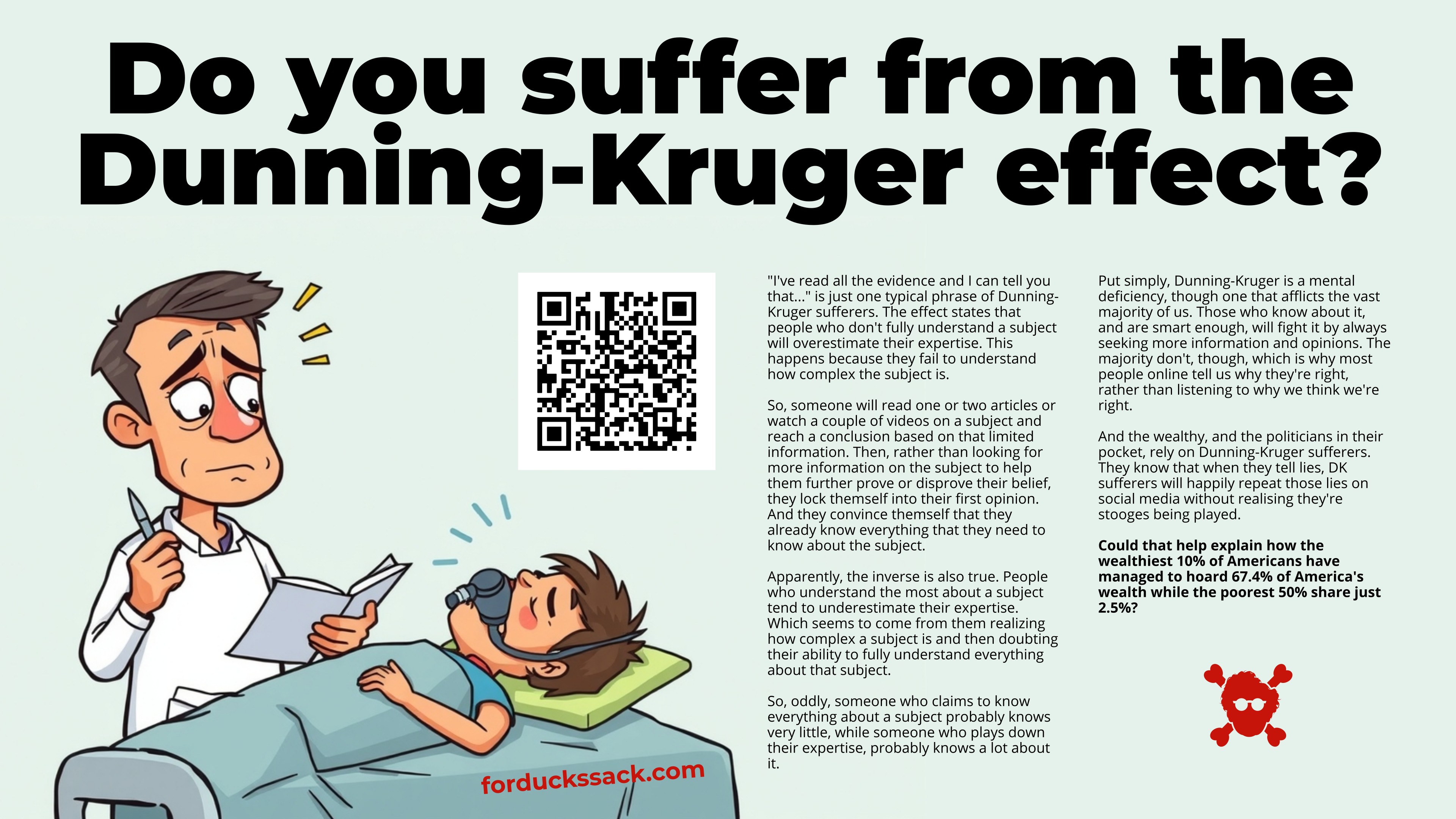
“I’ve read all the evidence and I can tell you that…” is just one typical phrase of Dunning-Kruger sufferers. The effect states that people who don’t fully understand a subject will overestimate their expertise. This happens because they fail to understand how complex the subject is.
So, someone will read one or two articles or watch a couple of videos on a subject and reach a conclusion based on that limited information. Then, rather than looking for more information on the subject to help them further prove or disprove their belief, they lock themself into their first opinion. And they convince themself that they already know everything that they need to know about the subject.
Apparently, the inverse is also true. People who understand the most about a subject tend to underestimate their expertise. Which seems to come from them realizing how complex a subject is and then doubting their ability to fully understand everything about that subject.
So, oddly, someone who claims to know everything about a subject probably knows very little, while someone who plays down their expertise, probably knows a lot about it.
Put simply, Dunning-Kruger is a mental deficiency, though one that afflicts the vast majority of us. Those who know about it, and are smart enough, will fight it by always seeking more information and opinions. The majority don’t, though, which is why most people online tell us why they’re right, rather than listening to why we think we’re right.
And the wealthy, and the politicians in their pocket, rely on Dunning-Kruger sufferers. They know that when they tell lies, DK sufferers will happily repeat those lies on social media without realising they’re stooges being played.
Could that help explain how the wealthiest 10% of Americans have managed to hoard 67.4% of America’s wealth while the poorest 50% share just 2.5%?
Download this post as a wallpaper

Save this post as wallpaper and share it in real life
What you just read? ☝ Shouldn't more people read it?
Share it now, before you forget


