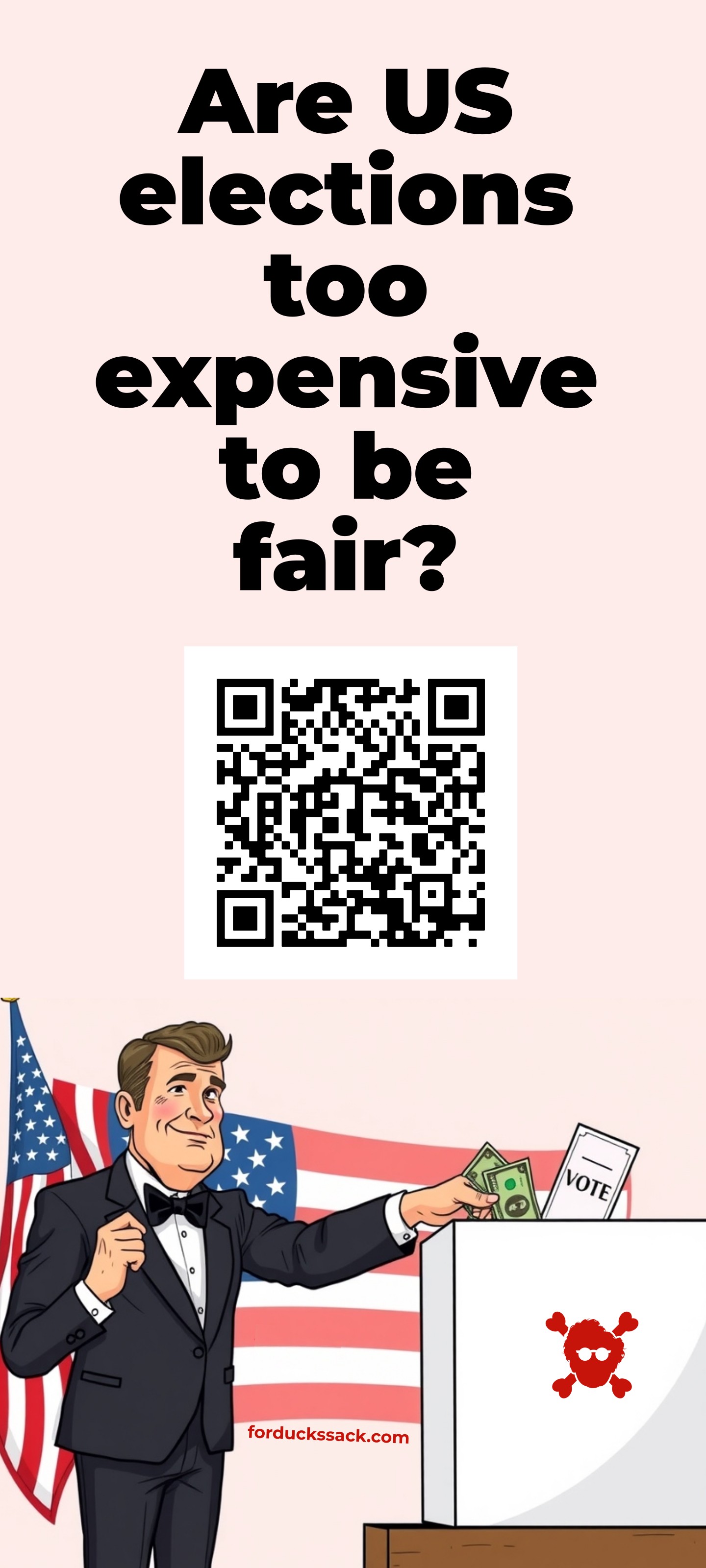
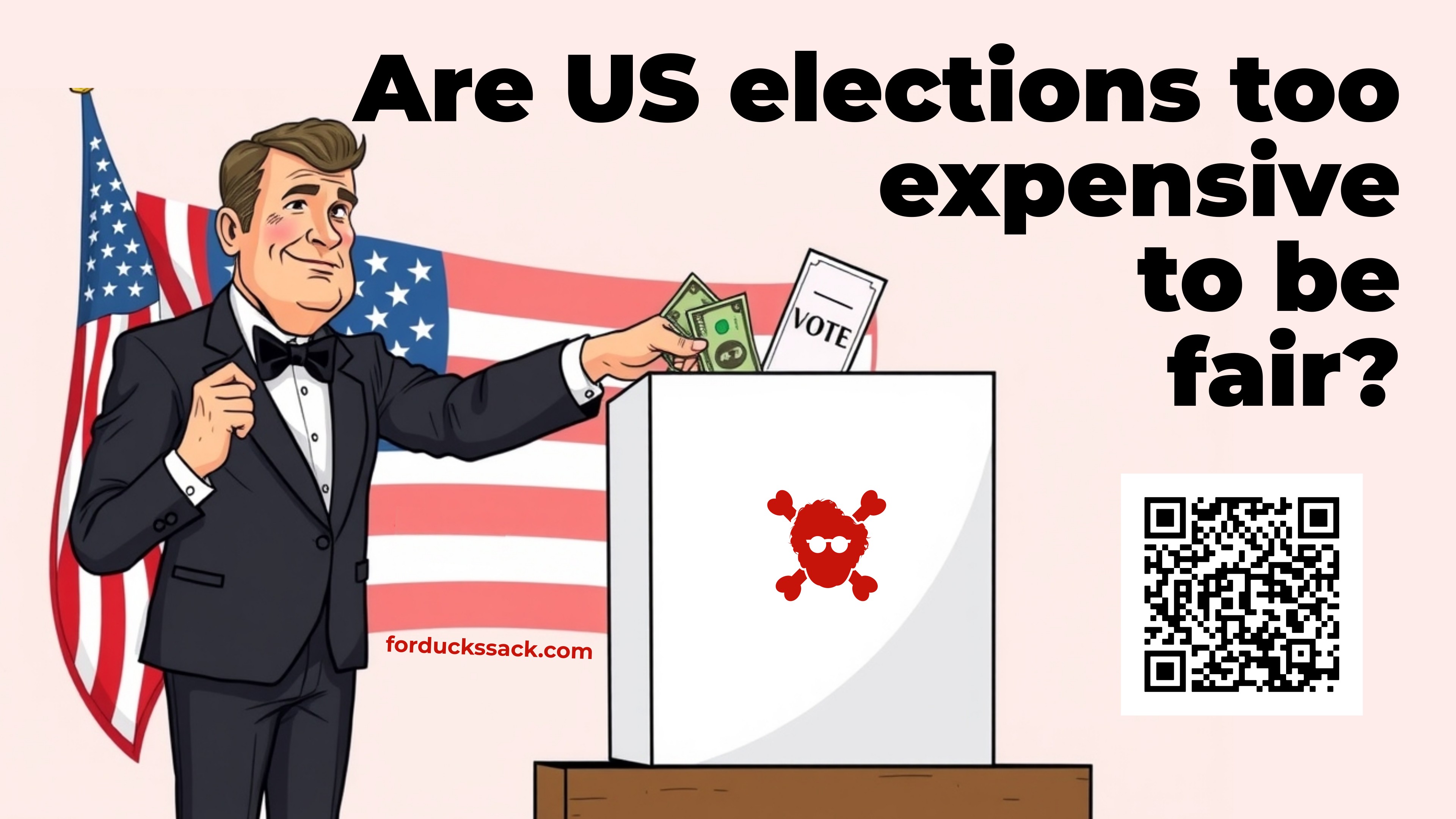
Are US elections too expensive to be fair?

Elected politicians, at state and the national level, are paid to represent their constituents to ensure that any American can afford to serve. If there was no payment, only the wealthy would be able to serve as only they have the wealth to support themselves without working a full time job.

So, obviously paying elected politicians is a good thing for democracy as it means that poor people can compete with wealthy people.

But is that really true?

Despite some loose attempts at controlling electoral spending, the guardrails are easily sidestepped. Meaning that the wealthiest can throw more money at an election than the other side and have a good chance of winning just because of their bigger budget.

We may like to think we’re far too smart to be influenced by advertising, but we’re clearly fooling ourselves. Why else would political campaigns throw so much money at advertising?

And they have at least two good reasons to. Two aspects of human behavior.

Consistency is key

I bet I’m not the only one who constantly questions if I picked the right supermarket checkout queue, as longer queues either side suddenly speed up and the old fella at my till is counting out coins, half of which seem to be foreign. It’s a horrible feeling because we want to be consistent with our choices, but it leaves us wondering if we should change queues. And then we’d have to admit we were wrong and everyone around us would see that we’re admitting we made a mistake. Then, what if we pick a new queue and the checkout assistant suddenly drops dead from a heart attack? We’ve made things worse by making a new mistake, just as our old queue is now just a blur, like the USS Enterprise hitting warp speed.

We’re the same with all our choices. We always want to be consistent, so if a political candidate can get us to back them in front of others, unless they do something crazy stupid, we’ll stick with our first choice. Doing anything else flags to others that we made a mistake.

So, political campaigns know they need to get in early and big with advertising. It’s a race to get voters making a choice and a commitment as early as possible. They know most people will stick to their choice once they make it.

Chances are you’ve had a passionate debate (blazing row) with someone about their political choice. And you’ve been left wondering why they feel so strongly about their candidate. But they’re not defending their candidate from your attacks, they’re defending their personal choice, and they care shed-loads more about that than any politician.

Of course, the ads don’t stop until the voting starts and a second aspect of human nature is key here.

Familiarity doesn’t breed contempt

Despite the saying, familiarity doesn’t breed contempt. At least not in the marketing world. One experiment had subjects read about eight pages of a website. While reading, some were shown banner ads for a fictional branded camera. Subjects were later invited to choose between two cameras, each with similar specs and prices. Those who saw the branded camera in the banner ads strongly preferred that camera.

When given a choice, the majority picked the camera that they were already familiar with. Surprisingly, that was even the case when the subjects said they didn’t recall seeing the camera banner ads.

I’ll be honest and admit I may have recalled the details inaccurately, but I’m 99% certain you’ll find it described in J. Scott Armstrong’s book, Persuasive Advertising. Though you probably won’t feel the need to check if you consider this first.

Everyone knows Coca-Cola, right? It’s the number one cola brand. So why do they waste so much money on advertising? It’s just a fizzy drink. They’re not telling buyers about great new features. “Try the new, browner Coke,” anyone?

But they have to do it, because Pepsi do.

I appreciate a significant subset of people find the two colas taste very different, but the majority struggle to differentiate them in taste tests. To them, they’re just the same drink. If Coke never advertised, Pepsi would always be front of mind for those buyers with no taste preference. Pepsi sales would skyrocket over Coca-Cola simply because the Pepsi logo would be fresh in the thoughts of most buyers as they open the cooler door.

If that wasn’t the case, we both know that Coca-Cola would save their money. However, in 2024 alone, they spent $5.146 billion on advertising. More than a billion dollars more than PepsiCo spent. Hence Coke is the number one seller.

It’s the same for political candidates who still need to leverage familiarity throughout the campaign to keep the voters’ original choices front of mind. There’s a little more to it, too.

Landslide elections are rare and it’s not unusual for votes to be decided by just a few percentage points. When polling companies share their research in the run up to elections, there are always a few percentage points of undecided voters, even the day before the election.

It doesn’t matter how seriously you, and others like you, take your responsibility to vote. And how deeply you consider the most important issues and the contrasting approaches of different politicians.

Political parties and the wealthy who fund them know that in most elections, they don’t always need to win the arguments. They just need to outspend the opposition.

Doing that will be enough to ensure that their candidate is most prominent in the minds of those still undecided voters who don’t think so deeply about their choice. They’ll simply place their mark next to the name that is most familiar to them.

And all this makes it near, but not quite, impossible for independents with little funding to compete on just the arguments and their policies.

Clearly, it should be no surprise that the US is run by politicians who ensure that the poorest 50% of Americans share just 2.5% of all wealth, while the wealthiest 10% of Americans hoard 67.4% of the wealth.

So, if the wealthy can effectively buy voters by paying for advertising, are US elections unfair?

Download this post as a wallpaper
Save this post as wallpaper and share it in real life

What you just read? ☝ Shouldn't more people read it?
Share it now, before you forget

Feel free to share the complete post

Thank you
If you want to see more ways society works for the wealthy, read your free copy of the gutbustingly funny When did Everything stop being great? from https://wdesbg.forduckssack.com

I'm interested to hear what you've got to say, but please keep it respectful. First comments will be vetted before going live. Straight-trolling won't cut it, unless it's funny. If you can troll me and make me laugh, I'll share your voice, but beware, I may want to be your friend.

Leave a Reply

Your email address will not be published. Required fields are marked *